

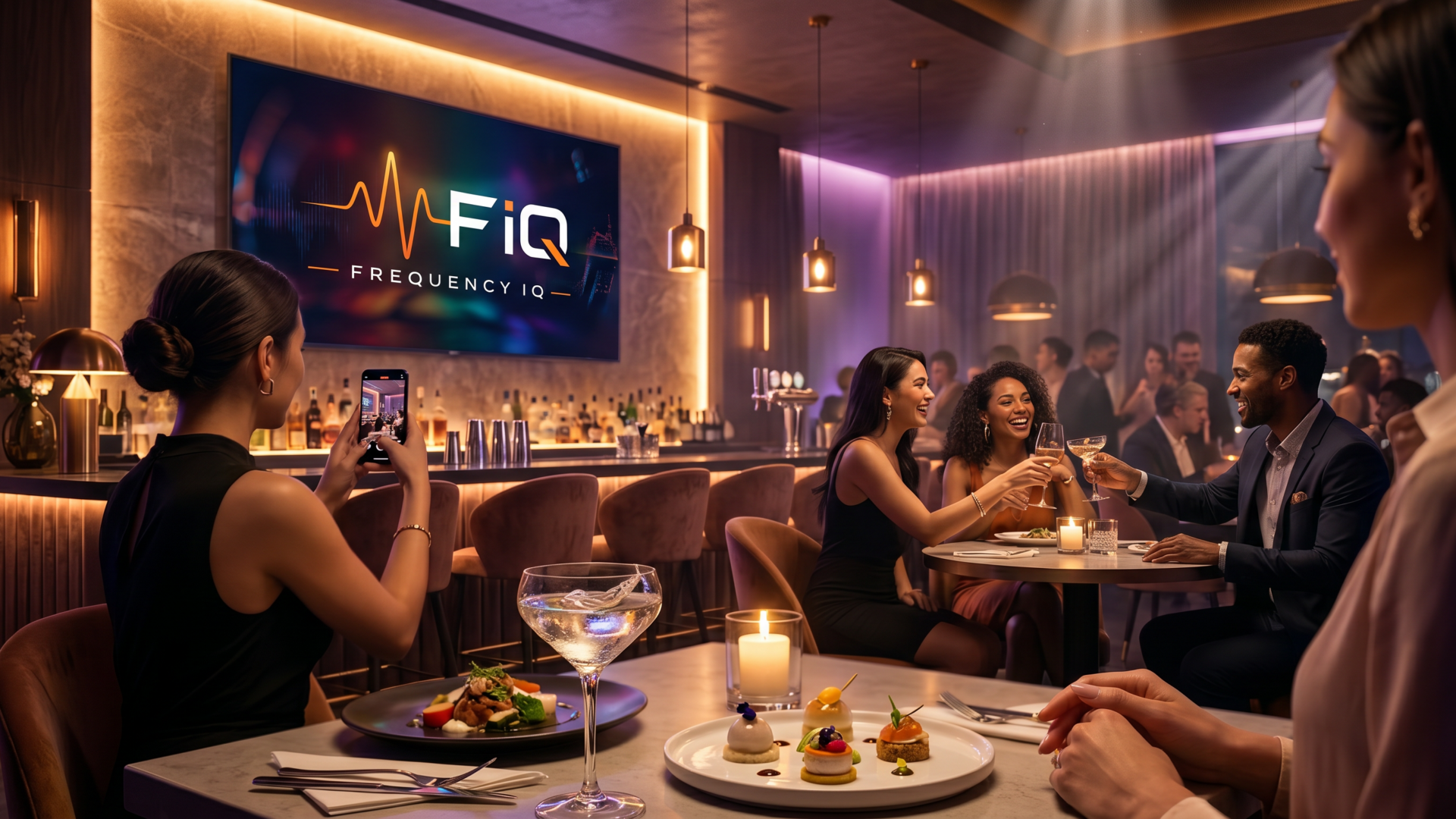
Walk into a Walt Disney World park, a Hard Rock Cafe location, or a Starbucks, and you’ll notice something interesting.
It’s not just the products.
It’s not just the service.
It’s the atmosphere.
The music. The visuals. The language. The smells. The energy. The feeling.
Everything is intentionally designed to influence how customers experience the brand.
What many business owners don’t realize is that this concept has been studied by marketing experts for more than 50 years.
At Frequency IQ, we’ve taken many of these proven principles and made them accessible to local businesses.
The Birth of Atmosphere Marketing
In 1973, marketing pioneer Philip Kotler introduced the concept of “Atmospherics” in his groundbreaking paper Atmospherics as a Marketing Tool. His research argued that customers don’t simply buy products—they respond to the total environment surrounding the product.
Kotler defined atmospherics as:
“The effort to design buying environments to produce specific emotional effects in the buyer that enhance purchase probability.”
In simple terms:
People buy with their emotions first and justify with logic later.
The environment influences those emotions.
That means your atmosphere is marketing.
Every Business Already Has a Frequency
The question isn’t whether your business has an atmosphere.
The question is whether you’re controlling it.
Customers are constantly receiving messages from:
- Music
- Screens
- Lighting
- Staff interactions
- Decor
- Signage
- Digital displays
- Social proof
- Brand messaging
Together, these elements create what customers remember long after they leave.
Kotler believed atmosphere becomes increasingly important when competitors offer similar products and similar pricing. In those situations, experience becomes the differentiator.
Sound familiar?
Most restaurants, bars, fitness studios, salons, and entertainment venues compete in exactly that environment today.
Why Music Matters More Than Most Owners Realize
Research has repeatedly shown that music affects customer behavior.
Music can influence:
- Mood
- Perceived wait times
- Length of stay
- Brand perception
- Purchase behavior
- Customer satisfaction
In fact, music is considered one of the primary atmospheric elements used to shape customer experience.
That’s why casinos use music.
Hotels use music.
Retail stores use music.
Theme parks use music.
And now local businesses can use music strategically too.
The Truth About Subliminal Marketing
When people hear the phrase “subliminal marketing,” they often think about the famous story from the 1950s where moviegoers were supposedly shown hidden messages such as:
“Drink Coca-Cola”
“Eat Popcorn”
for fractions of a second during films.
While the effectiveness of those specific experiments has been heavily debated, they introduced an important idea:
People are influenced by more than what they consciously notice.
Modern marketing research has largely moved away from hidden messages and toward something far more effective:
Consistent Environmental Influence
Customers don’t need a secret message.
They need repeated exposure.
Repeated exposure creates:
- Familiarity
- Trust
- Recall
- Emotional association
The more often people experience a brand in a positive environment, the stronger the connection becomes.
Why DJ Drops Work
Traditional advertising interrupts.
Frequency IQ integrates.
Instead of hearing:
“BUY NOW! LIMITED TIME OFFER!”
Customers hear:
“You’re listening to The Burger Palace Frequency.”
“Happy Hour starts at 4 PM.”
“Don’t forget to join our loyalty club.”
The message becomes part of the experience rather than an interruption.
This creates brand reinforcement without creating advertising fatigue.
Customers aren’t being sold.
They’re being immersed.
The Psychology of Familiarity
Psychologists often refer to the “mere exposure effect.”
The principle is simple:
The more people encounter something, the more positively they tend to feel about it.
Frequency IQ leverages this naturally through:
- Custom music
- DJ drops
- Visual content
- Branded messaging
- In-house entertainment
- Social media clips
Every touchpoint reinforces the same identity.
The customer begins to associate the venue with a specific feeling.
That’s exactly what major brands spend millions of dollars building.
Frequency IQ Is Environmental Branding for Local Businesses
Large brands have understood this for decades.
Disney controls the experience.
Starbucks controls the experience.
Hard Rock Cafe controls the experience.
Every song, visual, color, message, and environmental cue works together to strengthen brand identity.
Frequency IQ applies the same philosophy on a local-business budget.
By combining:
- Atmosphere marketing
- Custom music programming
- DJ drops
- Digital displays
- Social media content
- TV exposure
- Customer engagement tools
businesses can create a branded environment that customers remember.
The Future of Marketing Isn’t Louder Advertising
Consumers see thousands of advertisements every day.
Most are ignored.
The businesses that win tomorrow won’t necessarily be the ones shouting the loudest.
They’ll be the ones creating the most memorable experiences.
More than 50 years ago, Philip Kotler recognized that atmosphere itself could become a marketing tool. Today, that insight is more relevant than ever.
At Frequency IQ, we believe every business has a frequency.
The question is:
What frequency are your customers experiencing when they walk through your doors?
About Frequency IQ
Frequency IQ helps restaurants, bars, entertainment venues, and local businesses create immersive branded experiences through custom music, DJ drops, digital displays, social media content, TV exposure, customer engagement tools, and atmosphere marketing designed to increase customer retention, brand recall, and repeat visits.