

In the heart of the Texas Medical Center, innovation is usually measured in robotic surgical arms or genomic breakthroughs. But for the thousands of patients navigating our city’s massive healthcare infrastructure, the “bigness” of Houston healthcare can often feel cold, intimidating, and overwhelming.
As we move through 2026, the most successful facilities in Houston aren’t just competing on technology; they are competing on connection. Here is how leading Houston medical institutions are using strategic video production to bridge the gap between clinical excellence and human empathy.
1. Breaking the “White Coat” Barrier with Provider Spotlights
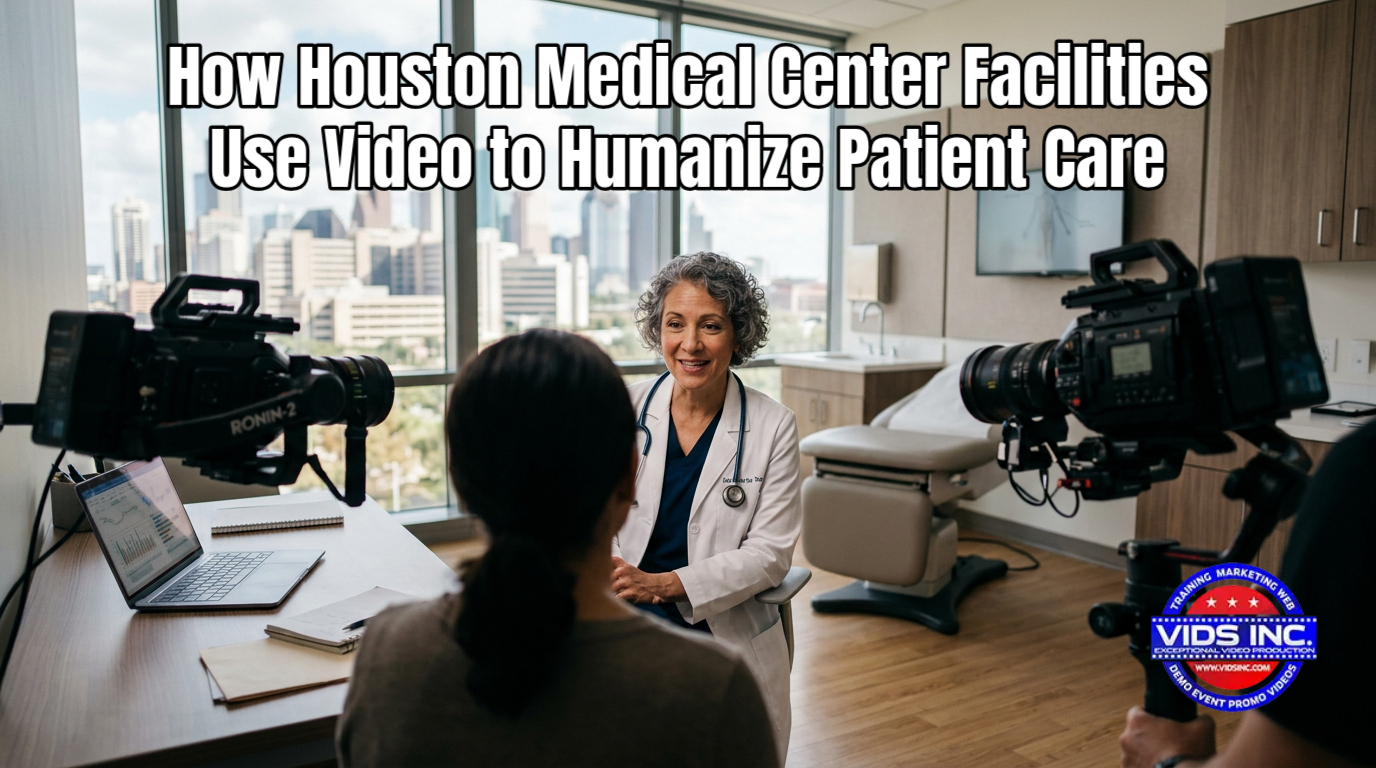
A patient’s journey often starts with anxiety. By the time they arrive at a facility in the TMC, they’ve likely spent hours Googling symptoms. Houston clinics are now using Physician Spotlight Videos to introduce surgeons and specialists before the first appointment.
Instead of a static headshot, a 60-second video allows a doctor to speak about their philosophy of care. When a patient hears a friendly voice and sees a warm smile, the clinical “white coat” barrier dissolves, replaced by a sense of familiarity.
2. Navigating the Complex: The “Arrival to Discharge” Walkthrough
The Texas Medical Center is a labyrinth. One of the biggest stressors for patients is simply finding the right parking garage or navigating the halls of a massive complex like Memorial Hermann or Houston Methodist.
Smart facilities are producing Navigational Video Guides. These short, mobile-friendly clips show patients exactly where to go, what the check-in desk looks like, and what to expect during their stay. By removing the “fear of the unknown,” hospitals significantly improve the patient experience before they even walk through the door.
3. Patient Testimonials: The Power of the Shared Journey
Nothing builds trust like a story of recovery told by a fellow Houstonian. However, in 2026, “talking head” interviews aren’t enough. Authentic patient stories now focus on the lifestyle returned to the patient—filmed in familiar Houston settings like Hermann Park or the Heights—showing that the care they received at the Medical Center gave them their life back.
4. The Logistics of Care: Filming Without Disruption
Humanizing care also means respecting the environment. Producing video in a high-stakes clinical setting requires more than just technical skill; it requires:
- HIPAA Compliance: Ensuring every frame respects patient privacy.
- Minimal Footprint: Using small, “run-and-gun” crews that don’t block hallways or interfere with life-saving equipment.
- Infection Control: Adhering to strict sanitization protocols for all camera gear.
The Bottom Line
In a city as vast as Houston, video is the most powerful tool a healthcare facility has to say, “We see you, we hear you, and you are safe with us.” When you humanize your care through video, you aren’t just marketing a service—you’re building a relationship.